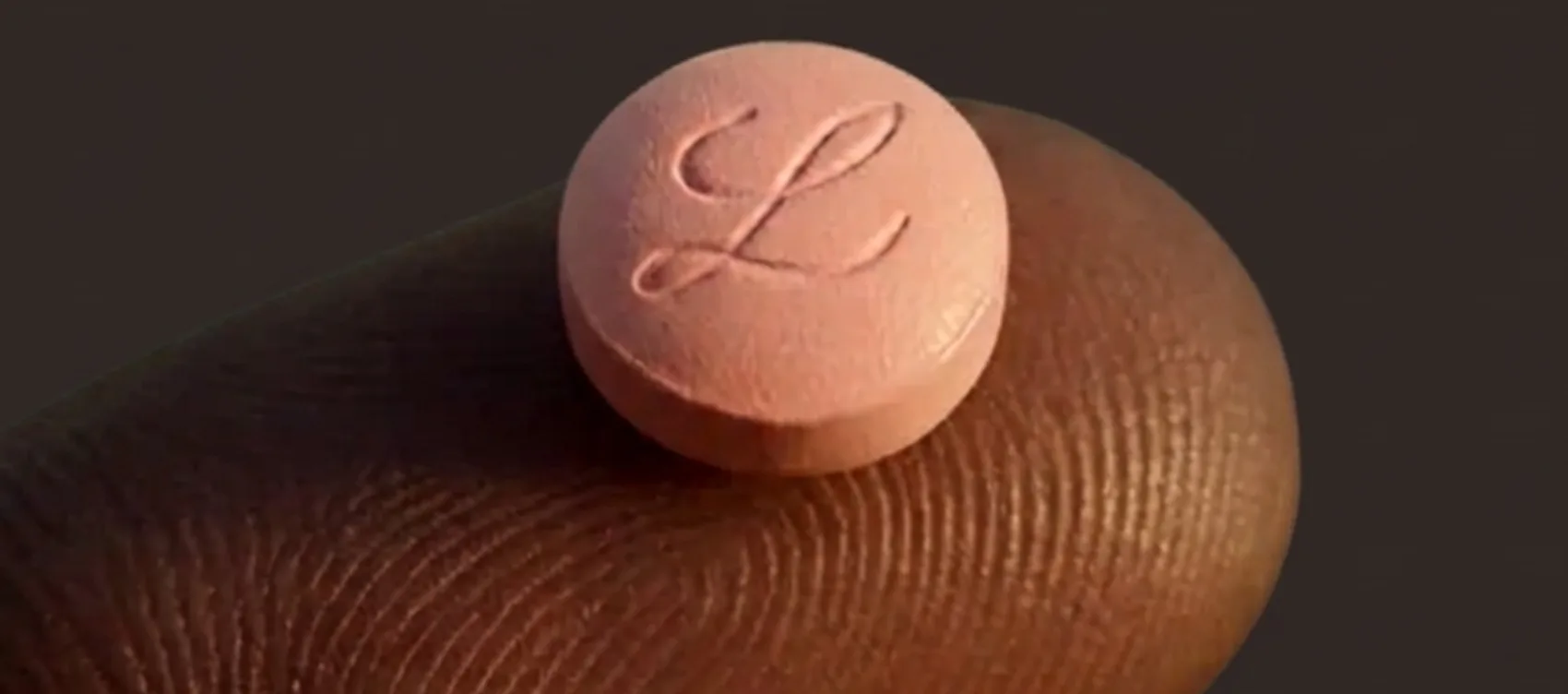
Pharmacist review pending. This page describes clinical trial findings and has not yet been checked by a licensed Canadian pharmacist. Every figure is cited below so you can read the source directly. Do not use it to make a treatment decision.
Quick verdict
Foundayo vs Rybelsus is a match-up between two once-daily GLP-1 tablets that get to the same receptor by very different routes. Foundayo is orforglipron, a small molecule from Eli Lilly. Rybelsus is semaglutide, a peptide from Novo Nordisk. In Canada they are not even in the same position: Rybelsus has been on pharmacy shelves for years as a type 2 diabetes medicine, and orforglipron has not been authorised here at all.
This page puts the two side by side using the documents that matter: the Canadian Rybelsus monograph, the US Foundayo label and the one randomised trial that tested them against each other. Let's break it down.
Foundayo vs Rybelsus: the short answer
- Chemistry: Foundayo is a non-peptide small molecule. Rybelsus is a peptide that needs help to survive the gut.
- Daily routine: Foundayo can be taken any time, with or without food. Rybelsus needs an empty stomach, a small sip of water and a 30 minute wait.
- Approved use: Foundayo is approved in the US for weight management. Rybelsus is approved in Canada and the US for type 2 diabetes.
- Head to head: in ACHIEVE-3, orforglipron lowered A1C and weight more, but caused more stomach side effects and more dropouts.
- In Canada today: only Rybelsus can be prescribed. Orforglipron is still waiting on Health Canada.
Side-by-side comparison table
Here is the whole Foundayo vs Rybelsus comparison on one screen. Each row comes from a regulator document or a peer-reviewed paper, listed in the sources at the bottom of the page.
| Foundayo | Rybelsus | |
|---|---|---|
| Active ingredient | orforglipron | semaglutide |
| Type of molecule | Small molecule (non-peptide) | Peptide, paired with an absorption helper |
| Maker | Eli Lilly | Novo Nordisk |
| US status | FDA-approved April 2026 for weight management | FDA-approved for type 2 diabetes |
| Canadian status | Not authorised (Pre-NOC) | Authorised since March 30, 2020 |
| Indication | Weight reduction and maintenance in adults with obesity, or overweight plus a related condition (US) | Blood sugar control in adults with type 2 diabetes, and cutting major heart event risk in higher-risk adults with type 2 diabetes (Canada) |
| Schedule | Once daily | Once daily |
| Tablet strengths | 0.8 mg, 2.5 mg, 5.5 mg, 9 mg, 14.5 mg, 17.2 mg | 3, 7, 14 mg, or 1.5, 4, 9 mg in the newer formulation |
| Food and water | No restrictions | Empty stomach, up to 120 mL of water, wait 30 minutes |
| A1C change in ACHIEVE-3 | -1.71% to -1.91% | -1.23% to -1.47% |
| Weight change in ACHIEVE-3 (on treatment) | -6.7% to -9.2% | -3.7% to -5.3% |
| Stomach side effects in ACHIEVE-3 | 58% to 59% | 37% to 45% |
| Stopped for side effects in ACHIEVE-3 | 9% to 10% | 4% to 5% |
| Canadian price | None, not sold here | $6.97 per tablet submitted to CADTH in 2021 |
| Public coverage | Under review by Canada's Drug Agency | CADTH recommended reimbursement with conditions (2021) |
The ACHIEVE-3 rows show the range across the two doses of each drug tested. A1C figures use the trial's main analysis, which counts everyone randomised. The weight figures come from the results posted on ClinicalTrials.gov and count only time spent on the assigned drug. More on both below.
What each pill is approved for, in Canada and the US
Start here, because approval status changes how you read every other Foundayo vs Rybelsus point.
Rybelsus: a diabetes medicine
The Canadian Rybelsus product monograph lists two uses, both in adults with type 2 diabetes. It can be used alongside diet and exercise to improve blood sugar control, either on its own when metformin is not suitable or combined with other diabetes medicines. It is also indicated to reduce the risk of major cardiovascular events in adults with type 2 diabetes who have established heart disease or are at high risk of it. Weight management does not appear anywhere in that list.
One wrinkle for anyone reading US sources. In early 2026 the FDA approved a name change so that the newer Rybelsus formulation (the 1.5, 4 and 9 mg tablets) is sold in the US as Ozempic tablets, while the original 3, 7 and 14 mg tablets keep the Rybelsus name. In Canada, the current monograph still lists both formulations under Rybelsus. Same molecule, same diabetes job, different label depending on the country.
Foundayo: a weight-management medicine (in the US)
The US Foundayo label indicates it, together with a reduced-calorie diet and more physical activity, to reduce excess body weight and keep it off long term in adults with obesity, or overweight plus at least one weight-related condition. It is not yet approved in the US for type 2 diabetes, even though the ACHIEVE programme tested it in exactly that group.
In Canada it has no indication of any kind. Lilly has one new drug submission for orforglipron in front of Health Canada, accepted in January 2026, and Canada's Drug Agency is running two separate reimbursement reviews (one for weight management, one for type 2 diabetes) in parallel. None of that equals approval. Our page on Foundayo's Canadian status follows each step, and the Canadian orforglipron tracker on our homepage keeps the latest date at the top.
Dosing schedules and doses compared
Both pills start low and step up, a pattern meant to give the gut time to adjust. Here is how each label lays it out. This is a description of the official schedules, not a plan to follow on your own.
| Step | Foundayo (US label) | Rybelsus, original tablets (Canada) | Rybelsus, newer tablets (Canada) |
|---|---|---|---|
| Start | 0.8 mg | 3 mg | 1.5 mg |
| Next | 2.5 mg, then 5.5 mg | 7 mg | 4 mg |
| Optional increases | 9 mg, 14.5 mg, 17.2 mg | 14 mg | 9 mg |
| Maximum | 17.2 mg | 14 mg | 9 mg |
| Minimum time per step | At least 30 days | 30 days | 30 days |
A few things stand out. Foundayo has six strengths and its label treats 5.5 mg as the first full dose, with the higher steps left to response and tolerability. Rybelsus has three strengths per formulation, and the monograph says the starting tablet is for getting used to the drug, not for blood sugar control. The Canadian monograph also says the two Rybelsus formulations are not swapped milligram for milligram: 1.5 mg matches 3 mg, 4 mg matches 7 mg, and 9 mg matches 14 mg. Both products say one tablet a day, never two to reach a higher dose.
Food and water rules: the daily difference you will notice
For most people this is the first Foundayo vs Rybelsus difference they feel, and it comes straight from the chemistry.
Semaglutide is a peptide, a short chain of amino acids, and your stomach is built to break those down. Rybelsus gets around that with an absorption helper and a strict routine. The Canadian monograph says to take it on an empty stomach at least 30 minutes before the first food, drink or other oral medicine of the day, with no more than half a glass of water (120 mL). Wait less, or drink more, and less semaglutide gets absorbed. The tablet goes down whole, never split or chewed.
Orforglipron is a small molecule, and small molecules survive digestion as a matter of routine. The US label says to take Foundayo once a day with or without food, and sets no water limit and no waiting period.
Our take: for someone who takes other morning pills, drinks coffee the moment they wake, or works shifts, that difference is not trivial. A medicine you can fit into your day is a medicine you are more likely to keep taking.
ACHIEVE-3: the Foundayo vs Rybelsus head-to-head trial
One randomised trial has compared the two directly. ACHIEVE-3 enrolled 1,698 adults with type 2 diabetes on metformin and ran for 52 weeks. It was open-label, non-inferiority and was published in The Lancet in 2026. You can read the ACHIEVE-3 abstract on PubMed.
How the trial was set up
- Adults with type 2 diabetes not controlled on at least 1,500 mg of metformin a day, an A1C between 7.0% and 10.5%, and a BMI of 25 or more.
- 131 sites in Argentina, China, Japan, Mexico and the United States. No Canadian sites.
- People were split evenly into four groups: orforglipron 12 mg or 36 mg, or oral semaglutide 7 mg or 14 mg, each taken once a day.
- Orforglipron started at 1 mg and semaglutide at 3 mg, with the dose stepped up every four weeks until the target was reached.
- The main question was whether orforglipron was at least as good as semaglutide for A1C at 52 weeks, within a 0.3% margin. If so, the trial then tested for superiority.
- Lilly, which makes orforglipron, funded the study.
Blood sugar results
Everyone started at an average A1C of 8.3%. Here is the change at 52 weeks under the trial's main analysis, which counts everyone randomised whether or not they stayed on the drug.
| Group | A1C change (all randomised) | A1C change (on treatment) | Reached A1C below 7% |
|---|---|---|---|
| Orforglipron 12 mg | -1.71% | -1.91% | 80% |
| Orforglipron 36 mg | -1.91% | -2.16% | 85% |
| Oral semaglutide 7 mg | -1.23% | -1.11% | 55% |
| Oral semaglutide 14 mg | -1.47% | -1.45% | 66% |
Both orforglipron doses beat both semaglutide doses on A1C, including the lower orforglipron dose against the higher semaglutide dose. The gap between orforglipron 36 mg and semaglutide 14 mg was 0.44 percentage points. The on-treatment column and the below 7% figures come from the results Lilly posted to ClinicalTrials.gov (NCT06045221), which leave out time after someone stopped the drug or added another diabetes medicine.
Weight results
| Group | Body weight change | Kilograms lost | Lost 10% or more |
|---|---|---|---|
| Orforglipron 12 mg | -6.7% | 6.6 kg | 28% |
| Orforglipron 36 mg | -9.2% | 8.9 kg | 43% |
| Oral semaglutide 7 mg | -3.7% | 3.6 kg | 13% |
| Oral semaglutide 14 mg | -5.3% | 5.0 kg | 21% |
These are on-treatment figures from the ClinicalTrials.gov results. Weight was a supporting outcome, not the main question, and everyone in the trial had diabetes, which tends to blunt weight loss on GLP-1 drugs.
Side effects, dropouts and heart rate
| Measure | Orforglipron | Oral semaglutide |
|---|---|---|
| Gastrointestinal adverse events | 58% to 59% | 37% to 45% |
| Discontinued due to adverse events | 9% to 10% | 4% to 5% |
| Mean pulse rate increase | 3.7 to 4.7 bpm | 1.0 to 1.5 bpm |
On tolerability, oral semaglutide came out ahead. Stomach-related events were the most common problem in every group, mostly mild to moderate. Pulse went up more on orforglipron (3.7 to 4.7 bpm) than on semaglutide (1.0 to 1.5 bpm). Four people died during the study, one in each orforglipron group and two in the semaglutide 7 mg group. The paper calls the safety of both drugs consistent with the GLP-1 class. For the full picture on nausea, liver signals and warnings, see our orforglipron safety guide.
What ACHIEVE-3 did not show
Here is why we would not treat ACHIEVE-3 as the last word on Foundayo vs Rybelsus.
Open-label, in type 2 diabetes only, and comparing orforglipron 12 mg and 36 mg capsules against oral semaglutide 7 mg and 14 mg. Not the top approved obesity doses of either drug.
- It was open-label. Participants and their doctors knew which drug they were on. That matters less for a lab value like A1C and more for side effect reports and decisions to stop.
- The orforglipron doses were trial doses. The 12 mg and 36 mg groups used the investigational formulation. Foundayo's commercial strengths are 0.8 mg, 2.5 mg, 5.5 mg, 9 mg, 14.5 mg, 17.2 mg, so the numbers on the box do not match the numbers in the paper.
- It was diabetes only. Nobody without type 2 diabetes was enrolled, so it says nothing direct about weight loss in people without diabetes.
- It did not test the highest oral semaglutide doses. The 25 mg Wegovy tablet, now approved in the US for weight, was not part of it.
- It ran one year and did not measure heart attacks or strokes. Rybelsus has a Canadian cardiovascular indication. Orforglipron has no equivalent outcome data in this trial.
- No Canadians took part, and Lilly paid for the study. Neither point makes the results wrong, but both are worth knowing.
Side effects: how the labels compare
Outside the head-to-head trial, each label gives its own picture. The Canadian Rybelsus monograph reports that in its placebo-controlled trials, stomach-related reactions hit 31.8% of people on 7 mg and 41.0% on 14 mg, against 21.3% on placebo, and most happened while the dose was going up. Stopping for any side effect ran at 6.5% and 10.4%, against 2.5% on placebo. Heart rate rose by 1 to 3 beats per minute.
The US Foundayo label lists nausea, constipation, diarrhea, vomiting, indigestion, abdominal pain, headache, bloating, fatigue, burping, reflux, gas and hair loss as its most common reactions. Both labels carry a thyroid C-cell tumour warning (Foundayo's notes that orforglipron did not cause these tumours in rodents, while semaglutide did), and neither should be used by anyone with a personal or family history of medullary thyroid cancer or MEN 2. Foundayo's label adds a note on oral birth control: use a backup or non-oral method for 30 days after starting and after each dose increase.
You cannot line up numbers from two different labels as if they came from one trial. Different people, doses and timeframes. That is exactly why ACHIEVE-3 is useful, and why its limits matter.
Foundayo vs Rybelsus cost and coverage in Canada
Rybelsus has a Canadian price history. When CADTH (now Canada's Drug Agency) reviewed it in 2021, Novo Nordisk submitted a price of $6.97 per tablet, the same at every strength, which CADTH put at about $2,543 per patient per year. CADTH recommended that public plans cover it with conditions: as an add-on to metformin or other diabetes medicines, and at a cost no higher than comparable drugs. That is a 2021 submitted price. What you pay at a pharmacy today, and whether your province or private plan lists it, can differ, so check with your pharmacist.
Foundayo has no Canadian price, because it cannot be sold here. Anything quoted in Canadian dollars right now is a guess or a cross-border workaround. Our orforglipron price guide covers what Lilly charges in the US and how Canadian pricing gets set after approval.
The higher-dose oral semaglutide: where Wegovy tablets fit
A fair Foundayo vs Rybelsus comparison needs this context. In December 2025 the FDA approved Wegovy tablets, once-daily oral semaglutide at a 25 mg maintenance dose, for weight management and to lower the risk of major cardiovascular events in adults with heart disease and obesity or overweight. The dose steps up from 1.5 mg to 4 mg, 9 mg and then 25 mg over three months. The routine is the same as Rybelsus: empty stomach, up to 4 ounces of water, 30 minutes before eating, drinking or other pills.
So in the US, the real weight-loss contest is Foundayo against Wegovy tablets, not against Rybelsus. In Canada, Health Canada's Drug Product Database lists Wegovy only as an injection pen as of October 2026. No Wegovy tablet has been authorised here yet.
Who might lean towards which pill
Our take, and it is opinion, not advice: this is how we think the trade-offs fall, based on the labels and ACHIEVE-3. Your prescriber knows your history. We do not.
- Rybelsus may suit a Canadian with type 2 diabetes who wants an oral GLP-1 today, can keep a fixed morning routine, and values the drug's long track record and its Canadian heart-risk indication.
- Foundayo may appeal to someone who struggles with the empty-stomach rule, takes several morning medicines, or is chasing more weight loss than Rybelsus delivered in ACHIEVE-3. In Canada, that person has to wait.
- Someone sensitive to nausea might note that oral semaglutide was easier to tolerate in the head-to-head, with roughly half the dropout rate.
- Someone focused on weight, not diabetes, should know neither pill is authorised in Canada for that purpose. Our guide on getting Foundayo from Canada covers what is legal while you wait.
Switching from Rybelsus to Foundayo: common questions
People who read up on Foundayo vs Rybelsus ask about switching more than anything else. Here is what we can say without knowing your history.
Can I switch now? Not in Canada. With no Notice of Compliance, orforglipron cannot be prescribed or dispensed here.
Is there an official conversion? We found none. The Foundayo label sets out its own dose ladder starting at 0.8 mg and gives no Rybelsus-to-Foundayo conversion table. ACHIEVE-3 did not test switching either.
Can I overlap them? The Foundayo label says not to combine it with another GLP-1 receptor agonist, and Rybelsus is one.
What should I ask my prescriber once it is approved? Whether your goal is blood sugar, weight or both; whether Foundayo carries a Canadian diabetes indication at launch; how your other medicines interact; and what coverage your plan offers. Next steps: watch our Health Canada review timeline for the decision date.
Common questions
Is Foundayo better than Rybelsus?
It depends what you mean by better. In ACHIEVE-3, a 52-week trial in adults with type 2 diabetes on metformin, orforglipron lowered A1C and weight more than oral semaglutide at the doses tested. It also caused more gastrointestinal side effects (58% to 59% against 37% to 45%) and more people stopped it (9% to 10% against 4% to 5%). Neither result decides the right pill for one person.
Are Foundayo and Rybelsus the same drug?
No. Both act on the GLP-1 receptor, but they are different molecules from different companies. Foundayo is orforglipron, a small non-peptide molecule made by Eli Lilly. Rybelsus is semaglutide, a peptide made by Novo Nordisk and the same active ingredient as Ozempic and Wegovy injections. That chemical difference is why one needs an empty stomach and the other does not.
Can I get Rybelsus in Canada for weight loss?
Rybelsus is authorised in Canada, but its Canadian product monograph covers adults with type 2 diabetes only, for blood sugar control and to cut the risk of major heart events in higher-risk patients. Weight management is not an approved Canadian use. Whether any medicine suits you is a conversation for a prescriber.
Can you take Foundayo and Rybelsus together?
The Foundayo US label says using it alongside another GLP-1 receptor agonist is not recommended, and Rybelsus is one. In Canada the question does not arise yet, because orforglipron has no Notice of Compliance and cannot be prescribed here. Anyone already on Rybelsus should not add or swap GLP-1 medicines without their prescriber.
Can I switch from Rybelsus to Foundayo in Canada?
Not today. Orforglipron is Pre-NOC in Canada, so no Canadian pharmacy can dispense it and no switch is possible here. If it is authorised, any change from Rybelsus would be a prescriber decision, because the two drugs have different dose ladders and no published Canadian guidance on moving between them exists yet.
Is the Wegovy pill the same as Rybelsus?
Both contain semaglutide taken by mouth, but they are separate products. The Wegovy tablet approved in the United States in December 2025 goes up to 25 mg a day and is indicated for weight management. Rybelsus tops out at 14 mg (or 9 mg in the newer formulation) and is a diabetes medicine. Health Canada lists no Wegovy tablet yet.
Sources
- Efficacy and safety of once-daily oral orforglipron compared with oral semaglutide in adults with type 2 diabetes (ACHIEVE-3). The Lancet, February 2026.
- ACHIEVE-3 Study Results (NCT06045221): Orforglipron Compared With Oral Semaglutide in Type 2 Diabetes. ClinicalTrials.gov, U.S. National Library of Medicine, September 2026.
- Rybelsus (semaglutide tablets) Product Monograph. Novo Nordisk Canada Inc., December 2025.
- FOUNDAYO (orforglipron) tablets, for oral use: Full Prescribing Information. Eli Lilly and Company / U.S. Food and Drug Administration, April 2026.
- CADTH Reimbursement Recommendation: Semaglutide (Rybelsus). Canadian Agency for Drugs and Technologies in Health (now Canada's Drug Agency), June 2021.
- NDA 218316 Approval Letter: Wegovy (semaglutide) tablets. U.S. Food and Drug Administration, December 2025.
- NDA 213051/S-030 Supplement Approval: Rybelsus (formulation R2) renamed Ozempic (semaglutide) tablets. U.S. Food and Drug Administration, January 2026.
- orforglipron (T2D): Reimbursement Review. Canada's Drug Agency (CDA-AMC), May 2026.
- orforglipron: Reimbursement Review. Canada's Drug Agency (CDA-AMC), April 2026.